Introduction
What started as a single server and a curiosity for virtualization has evolved into a fully featured homelab built around self-hosting, automation, and modern infrastructure.
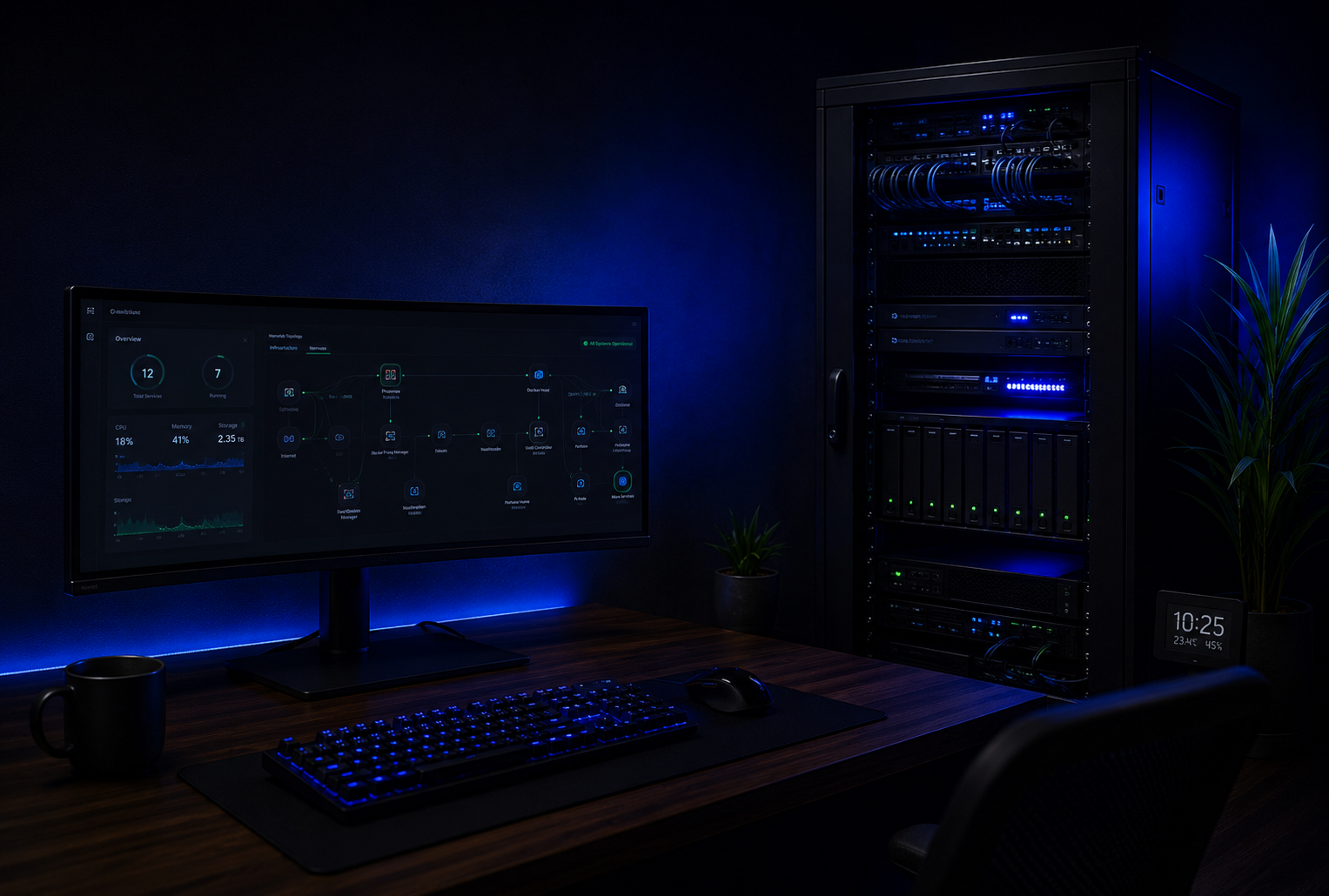
Today my lab runs everything from virtual machines and containers to monitoring dashboards, storage, networking, and web services—all hosted at home and under my control.
This blog post is an overview of the technologies powering the lab and how they fit together.
Hardware
At the heart of the setup is an HP Z400 workstation upgraded with additional memory and storage.
The server provides enough resources to run multiple virtual machines simultaneously while remaining quiet and energy efficient enough for a home environment.
Virtualization with Proxmox
The foundation of the lab is Proxmox VE.
Proxmox allows me to run multiple virtual machines and containers on a single host while providing snapshots, backups, templates, and a simple web interface.
Current workloads include:
- Ubuntu servers
- Docker hosts
- OPNsense firewall
- WordPress
- Nextcloud
- Monitoring systems
Networking with OPNsense
Networking is handled by OPNsense.
Using VLANs, firewall rules, VPNs, and segmented networks, the lab is isolated from the main home network while remaining accessible when required.
This allows me to experiment safely while maintaining security.
Monitoring & Observability
Visibility is critical.
Grafana dashboards and Prometheus exporters provide real-time metrics for:
- CPU and memory
- Storage utilisation
- Network throughput
- SSL expiry dates
- Service availability
- Docker container health
I also maintain custom dashboards and alerting systems to monitor applications and infrastructure.
Storage & Backups
Data is stored across multiple disks with backup routines designed to protect against hardware failure and accidental changes.
Backups are tested regularly and replicated where possible.
Containers & Self-Hosted Services
Docker makes deploying applications quick and repeatable.
Services currently hosted include:
- WordPress
- Nextcloud
- Portainer
- Grafana
- Prometheus
- Home Assistant
- Various development tools
What’s Next?
The lab is constantly evolving.
Future plans include:
- High availability
- Kubernetes experimentation
- AI-powered monitoring
- More automation
- Additional self-hosted services
Building a homelab is never really finished—and that’s part of the fun.
No responses yet